On this page
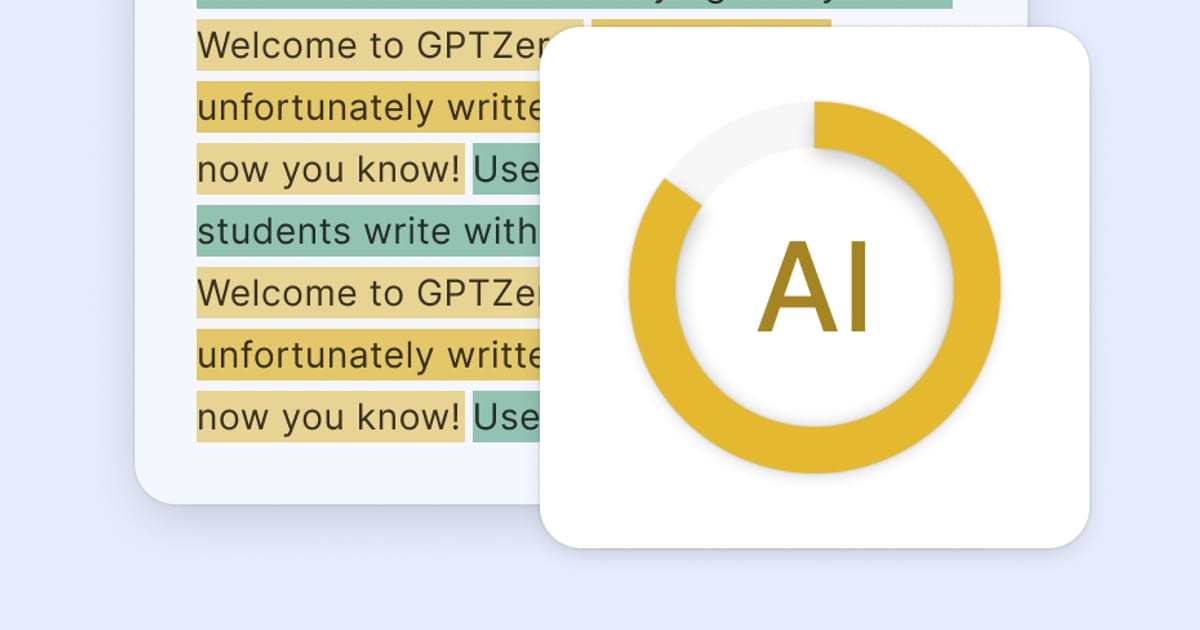
GPTZero is an AI-content detector created by Edward Tian, then a Princeton student, and released in early 2023 as ChatGPT swept through classrooms. It estimates how likely a passage was machine-written by measuring perplexity (how predictable the word choices are) and burstiness (how much sentence complexity varies) — AI text tends to be smoother and more uniform than human writing.
It has become one of the best-known names in a crowded field that includes Turnitin’s AI detector, Copyleaks, Originality.ai, and Winston AI. GPTZero’s pitch is breadth of access: a free web checker, browser extensions, an LMS-friendly batch mode, and an API, all aimed at teachers, publishers, and hiring teams who need a quick read on whether text came from ChatGPT, Claude, or Gemini.
Importantly, GPTZero itself frames its scores as signals, not verdicts — a stance worth remembering given how consequential a false accusation can be.
Key Features
- Detects output from ChatGPT, Claude, Gemini, and other major models
- Sentence-level highlighting of likely AI-written passages
- Perplexity and burstiness scoring with a human/AI/mixed verdict
- Batch file upload for grading or reviewing many documents
- API and LMS integrations for institutional workflows
- Writing-analysis and source-checking add-ons
Pricing
- Free: a monthly character/word allowance, good for occasional checks
- Essential (~$10/month): higher limits, batch uploads
- Premium/Pro (~$15–24/month): large monthly volume, advanced features
- Organization/Enterprise: custom volume and integrations
Best For
Teachers, professors, editors, and HR reviewers who want a fast, accessible first-pass check on whether a submission was likely AI-generated.
Limitations
No AI detector is reliable enough to punish someone on its word alone. GPTZero can flag genuine human writing as AI (a documented risk for non-native English writers) and can miss text that has been paraphrased or run through a humanizer. Treat it as one input alongside human judgment, not as evidence.