
On this page
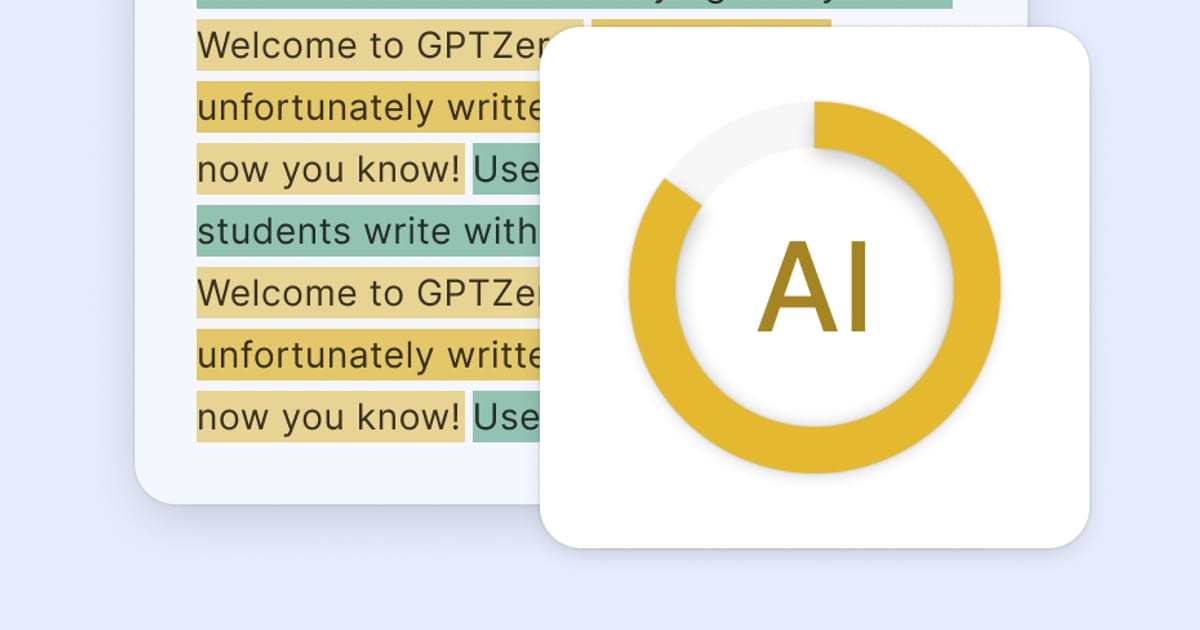
ZeroGPT is a widely used free AI-content detector that estimates whether text was written by an AI model such as ChatGPT, GPT-4, or Gemini. Paste text and it returns an “AI percentage” score and highlights the specific sentences it judges likely machine-generated. Basic checks require no account, which is why it’s a common first stop for teachers, students, and editors.
It competes with GPTZero, Originality.ai, Copyleaks, and Turnitin’s AI detector. ZeroGPT’s appeal is purely access and speed — free, instant, browser-based. The important caveat, which applies to every tool in the category, is that AI detection is probabilistic and not dependable: results should be treated as a signal, never as proof.
Key Features
- Estimates AI-generated probability for pasted text
- Sentence-level highlighting of flagged passages
- No account needed for basic checks
- Batch and file uploads for longer documents
- Support for multiple languages
- API access for automated or bulk workflows
Pricing
- Free: Checks up to a per-scan character limit
- Premium (~$9-$10/month and up): Higher limits, batch processing, and API access
- Enterprise: Custom volume and integration options
Best For
Teachers, students, editors, and reviewers who want a quick, free gut-check on whether a piece of text might be AI-written — as one input among several, not a verdict.
Limitations
AI detectors, ZeroGPT included, produce false positives (notably on writing by non-native English speakers) and are easily fooled by paraphrasing or light editing. No detector, including this one, is accurate enough to justify accusing a student or rejecting a candidate on its score alone. Paid tools like Originality.ai are often cited as more accurate, but the same fundamental unreliability applies to the whole category.