On this page
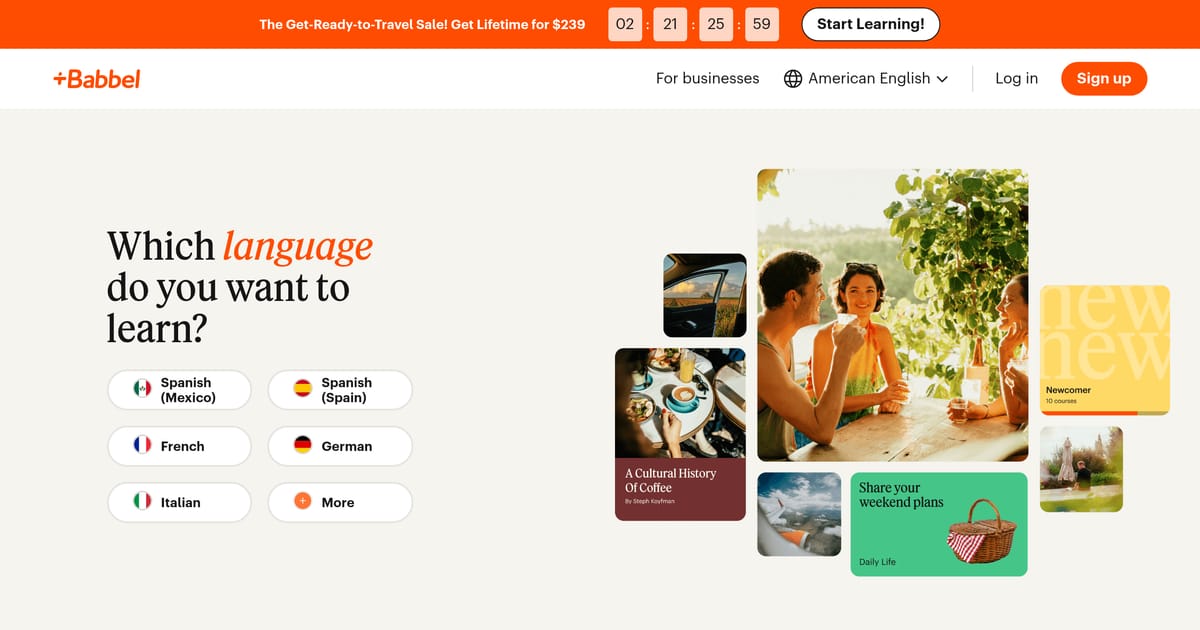
Babbel is the serious sibling in the language-app family. Founded in Berlin in 2007, it was the first language app to sell subscriptions — and that business model shapes the product: no ads, no gamified streak pressure, just a structured curriculum written by an in-house team of over 150 linguists and language teachers. Where Duolingo teaches you odd sentences about owls to keep you tapping, Babbel’s lessons are built around dialogues you’d genuinely have — ordering food, introducing yourself at work, asking for directions.
Lessons run 10–15 minutes and follow a deliberate arc: new vocabulary in context, speech-recognition pronunciation practice, grammar explained in plain terms, then spaced-repetition review sessions that resurface what you’re about to forget. Courses are also tailored to your native language — a Spanish course for German speakers highlights different pitfalls than the one for English speakers, a level of curriculum care most competitors skip.
The ecosystem has grown beyond the app: Babbel Live offers small-group video classes with certified teachers (sold separately), and free podcasts extend listening practice between lessons. An AI conversation partner feature lets learners rehearse speaking without the anxiety of a live human.
Key Features
- Structured courses in 14 languages, tailored to your native language
- Speech recognition that scores pronunciation as you speak
- Explicit grammar explanations woven into lessons
- Spaced-repetition review manager for long-term retention
- Babbel Live small-group video classes with certified teachers (add-on)
- Podcasts and culture notes for context beyond vocabulary
- Offline mode for downloaded lessons
Pricing
- Subscription: sold in 3-, 6-, and 12-month terms; the effective rate drops from around $15/month to roughly $8/month on longer commitments; one subscription covers all 14 languages
- Lifetime: about $299 list price, routinely discounted below $200 — pay once, keep everything
- Babbel Live: a separate, pricier subscription for unlimited live classes
Best For
Adult learners who want a course, not a game — especially travelers and professionals targeting European languages like Spanish, French, German, or Italian, and anyone who quit Duolingo feeling they couldn’t actually hold a conversation.
Limitations
The 14-language catalog is the big constraint: there’s no Japanese, Korean, Mandarin, or Arabic-script depth, so learners of Asian languages should look at Pimsleur or LingoDeer. Advanced learners will also outgrow it — content past B1/B2 level is thin, and there’s no real free tier to test beyond each course’s first lesson.