Best AI Flashcard Apps in 2026 (Ranked & Reviewed)
Anki vs Quizlet vs Brainscape — the top AI flashcard apps compared on spaced repetition, ease of use, content library, and price.

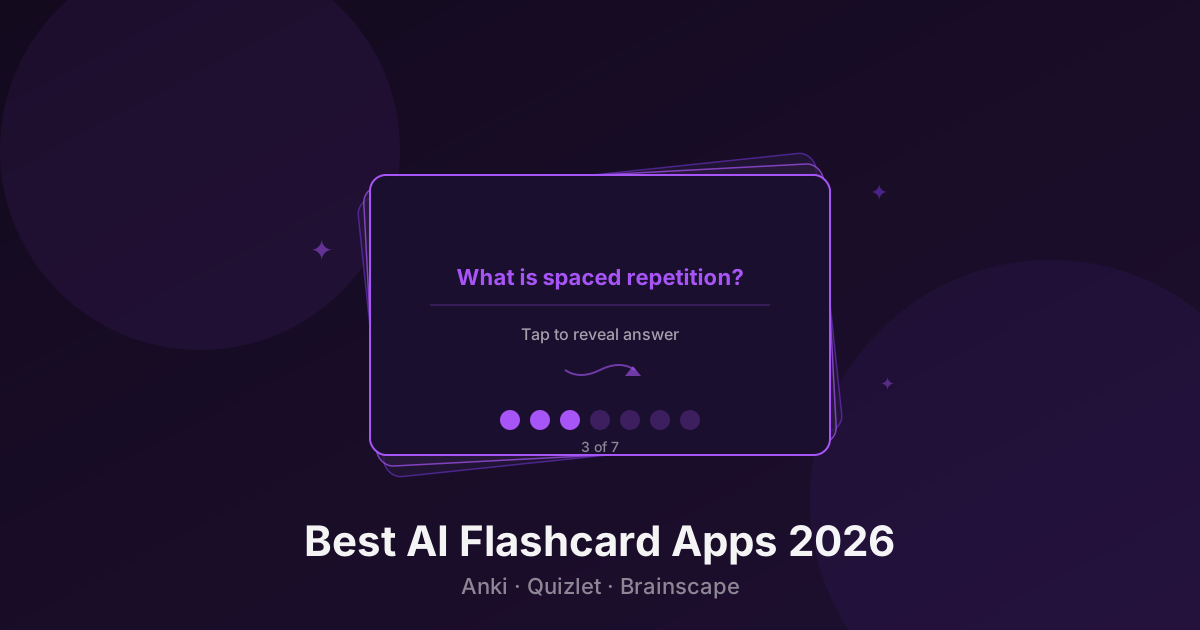
Flashcards work. Decades of cognitive science confirm that active recall combined with spaced repetition is the most efficient way to memorize anything. AI has made it faster to create decks and smarter about when to show you each card.
Here are the three best apps.
Quick Comparison
| Tool | Best For | Algorithm | Pricing |
|---|---|---|---|
| Anki | Maximum retention | SM-2 (proven) | Free |
| Quizlet | Ready-made decks, ease | Adaptive | Free · $7.99/mo |
| Brainscape | Exam prep, confidence-based | CBR | Freemium |
1. Anki — Best for Serious Learners

Pricing: Free on desktop and Android · $24.99 iOS one-time
Anki is the flashcard app that medical students swear by. Its spaced repetition algorithm shows you each card right before you’d forget it — dramatically reducing study time while maximizing retention. After rating your recall (Again / Hard / Good / Easy), Anki schedules the next review automatically.
The interface is bare-bones — Anki hasn’t won any design awards. But the AnkiWeb sync works flawlessly across devices, and the community has built thousands of high-quality shared decks: USMLE Step 1 (Anking), Japanese vocabulary (Core 2000), medical pharmacology, and more.
Add-ons extend it significantly — image occlusion for anatomy diagrams, LaTeX for math, GPT-powered card generation.
Limitation: Real learning curve. The settings are complex and intimidating for new users.
Best for: Medical students, language learners, anyone memorizing large volumes of material who wants the most effective algorithm.
2. Quizlet — Best for Ease of Use
Pricing: Free · Quizlet Plus $7.99/mo
Quizlet is the most accessible flashcard app — clean design, instant setup, and 500+ million community study sets covering every subject imaginable. Find a set for your exact textbook chapter, your specific professor’s terminology, or any standardized exam.
The AI features (Plus plan) let you generate a complete flashcard set from a photo of your notes, a paste of text, or a topic description. Quizlet AI also creates practice tests and study guides from your decks automatically.
Multiple study modes — flashcards, learn, write, spell, test, match — keep review varied and prevent boredom. The spaced repetition in “Learn” mode adapts to your performance.
Limitation: Spaced repetition is less precise than Anki. For maximum retention efficiency, Anki wins. For ease and content availability, Quizlet wins.
Best for: Students at all levels who want access to ready-made content and a frictionless experience.
→ See Quizlet details and pricing
3. Brainscape — Best for Exam Preparation

Pricing: Free · Pro $9.99/mo
Brainscape’s confidence-based repetition (CBR) system asks you to rate each card 1-5 instead of Anki’s Again/Hard/Good/Easy. The algorithm repeats cards you rated 1-2 much more frequently, while spacing out cards you rated 4-5 — intuitive and effective.
The platform has millions of certified flashcard decks for professional exams: MCAT, bar exam, CFA, LSAT, GRE, and hundreds of certification exams. These decks are curated by experts, not crowdsourced — quality is more reliable than Quizlet community decks.
Best for: Professional exam candidates (MCAT, bar, CFA), learners who prefer a confidence-based approach.
→ See Brainscape details and pricing
How to Choose
Maximum retention efficiency: Anki
Want ready-made decks and easy setup: Quizlet
Studying for a professional exam: Brainscape
On any budget: Anki (free) or Quizlet free tier
Browse all AI Flashcard Maker tools or explore the full AI Learning category.
Questions people ask
What is the best AI flashcard app in 2026?
Anki is the best flashcard app for serious learners who need maximum retention — it has the most proven spaced repetition algorithm and is free on all platforms except iOS. Quizlet is best for students who want a huge library of ready-made study sets and easy content creation. Brainscape is best for exam-focused learners who want structured pre-made decks.
Is Anki still the best spaced repetition app?
Yes. Anki's SM-2 algorithm, developed in the 1980s and refined over decades, remains the gold standard for spaced repetition. No competitor has displaced it for medical students, language learners, and anyone memorizing large volumes of information. The learning curve is real but the results are unmatched.
Can AI create flashcards for me?
Yes. Quizlet's AI can generate a complete flashcard set from a topic, paste of text, or document upload. Anki has third-party add-ons that use GPT to auto-generate cards. This dramatically speeds up deck creation — you focus on reviewing, not typing.
Is Quizlet free?
Quizlet has a free tier that gives access to community study sets and basic study modes. Quizlet Plus ($7.99/mo) adds AI features, offline access, and no ads. For most students, the free tier is sufficient.
Tools mentioned
The toolbox


Send this to someone who's confused about AI.
It takes one tap, and they get the version without the hype.